Why The Best Childhood Doll Does Not Tell Your Child What To Imagine
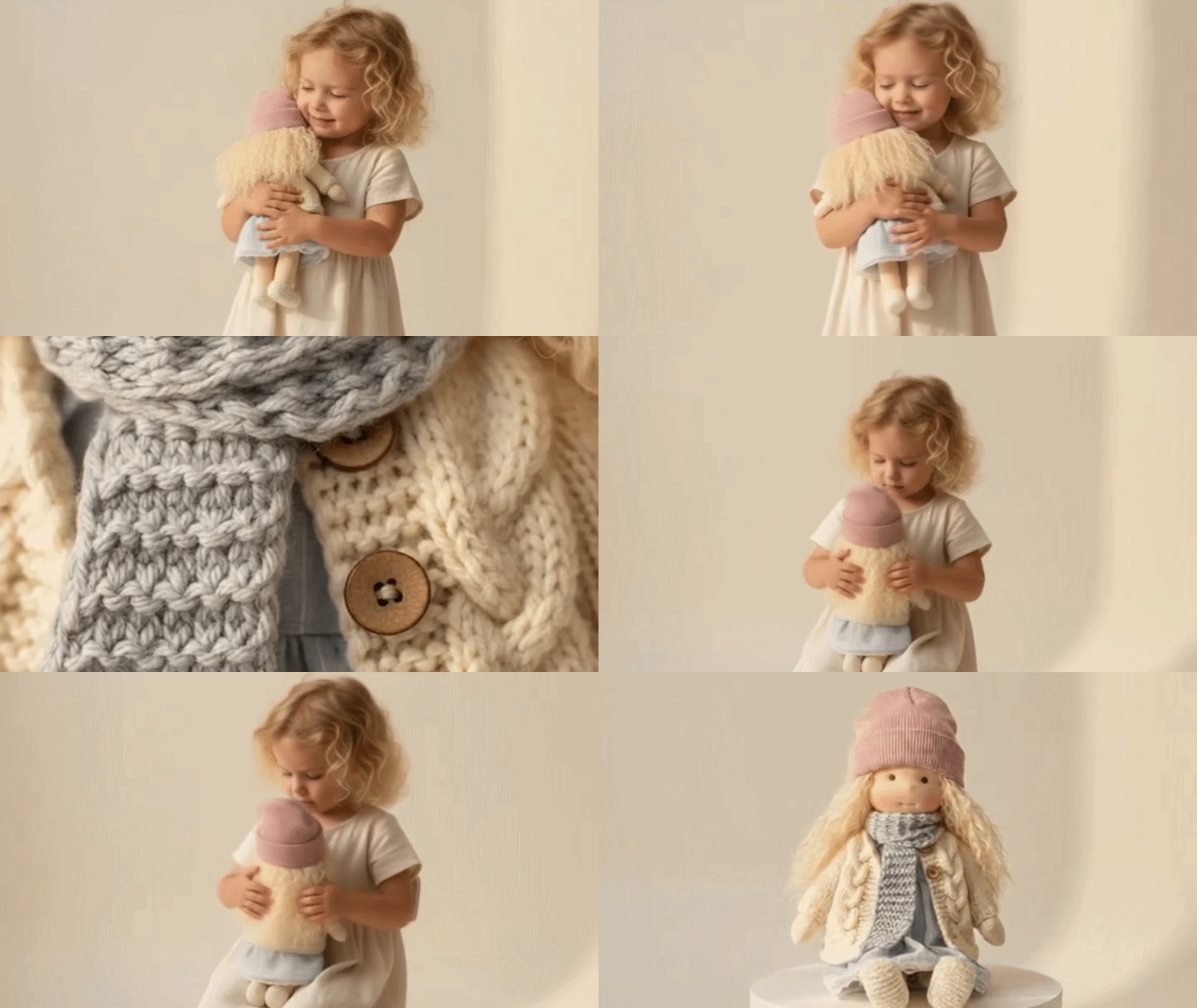
When parents choose a doll, it is easy to focus on bright colors, realistic details, sounds, or accessories. But the feature that often keeps a child returning is not what the toy does for them. It is how much room the toy leaves for the child to decide what happens next.
Serendity™ is designed around that quieter idea. Her softly suggested face does not announce one permanent mood, and her play is not controlled by buttons or scripted phrases. A child can decide whether she is sleepy, brave, worried, joyful, or ready for an entirely new adventure.
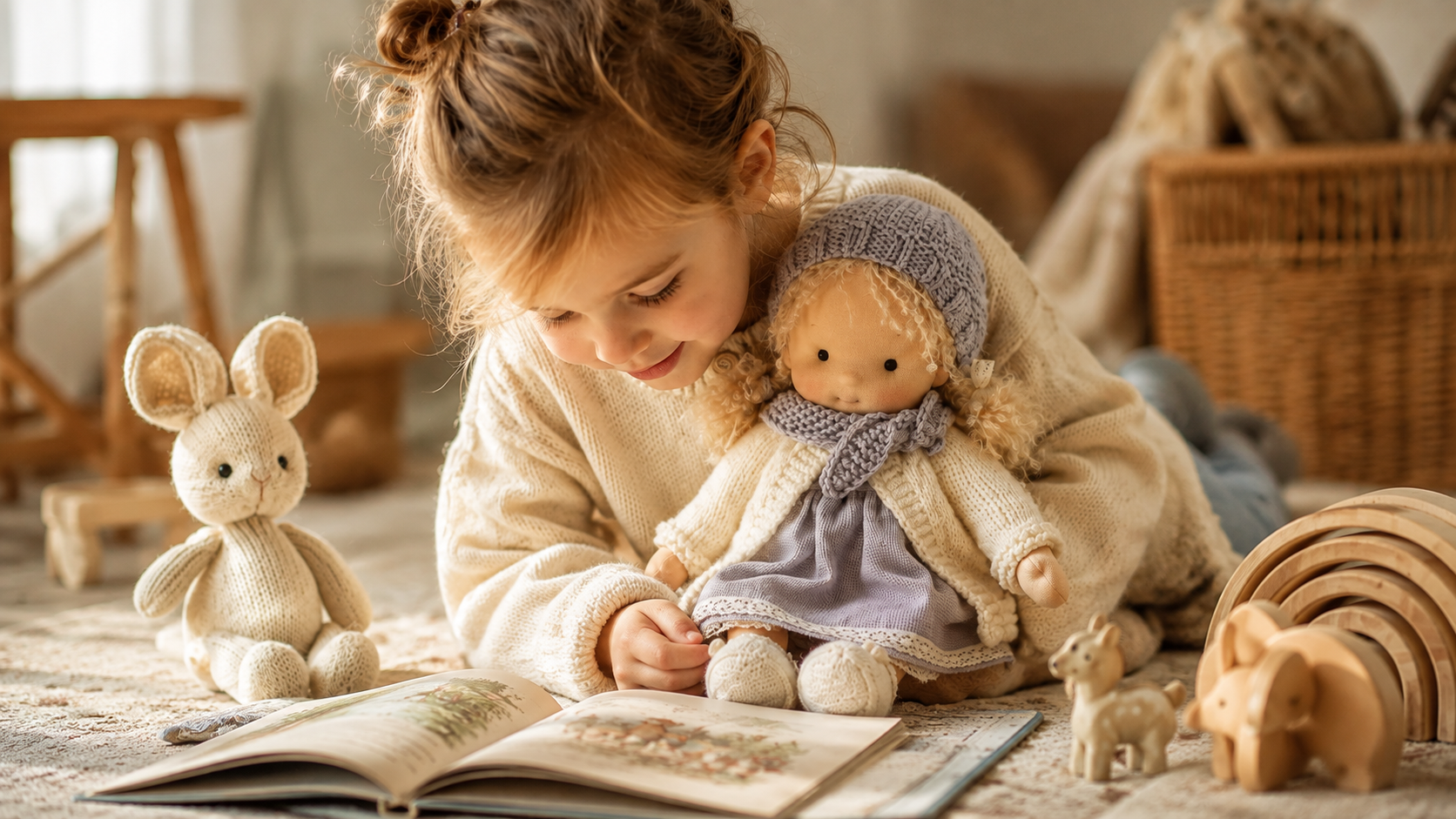
A useful open-ended toy gives the child more decisions than the toy makes. Serendity does not decide her voice, personality, job, mood, or next adventure. One afternoon she can be a forest explorer; by bedtime she may be a very tired guest who apparently needs three blankets and a snack before she will sleep.
That is the practical value behind the Waldorf-inspired design. Instead of asking parents to buy an educational label, Serendity offers something easy to understand: a warm, tactile companion that encourages storytelling, nurturing role-play, dressing, hairstyling, and the kind of open-ended play that can grow with a child.
The Feature I Notice First: A Face That Leaves The Story Open
Many dolls arrive with a fixed identity. Their expression, voice, costume, and accessories tell the child exactly who the character is. Serendity takes the opposite approach. Her eyes and mouth are softly suggested, allowing the child to interpret her emotion differently from one moment to the next.
In practical terms, this means one companion can take on many roles. She can be a friend at tea, a patient at a pretend clinic, a traveler in a blanket fort, or a little one who needs comforting. The toy stays familiar while the story keeps changing.
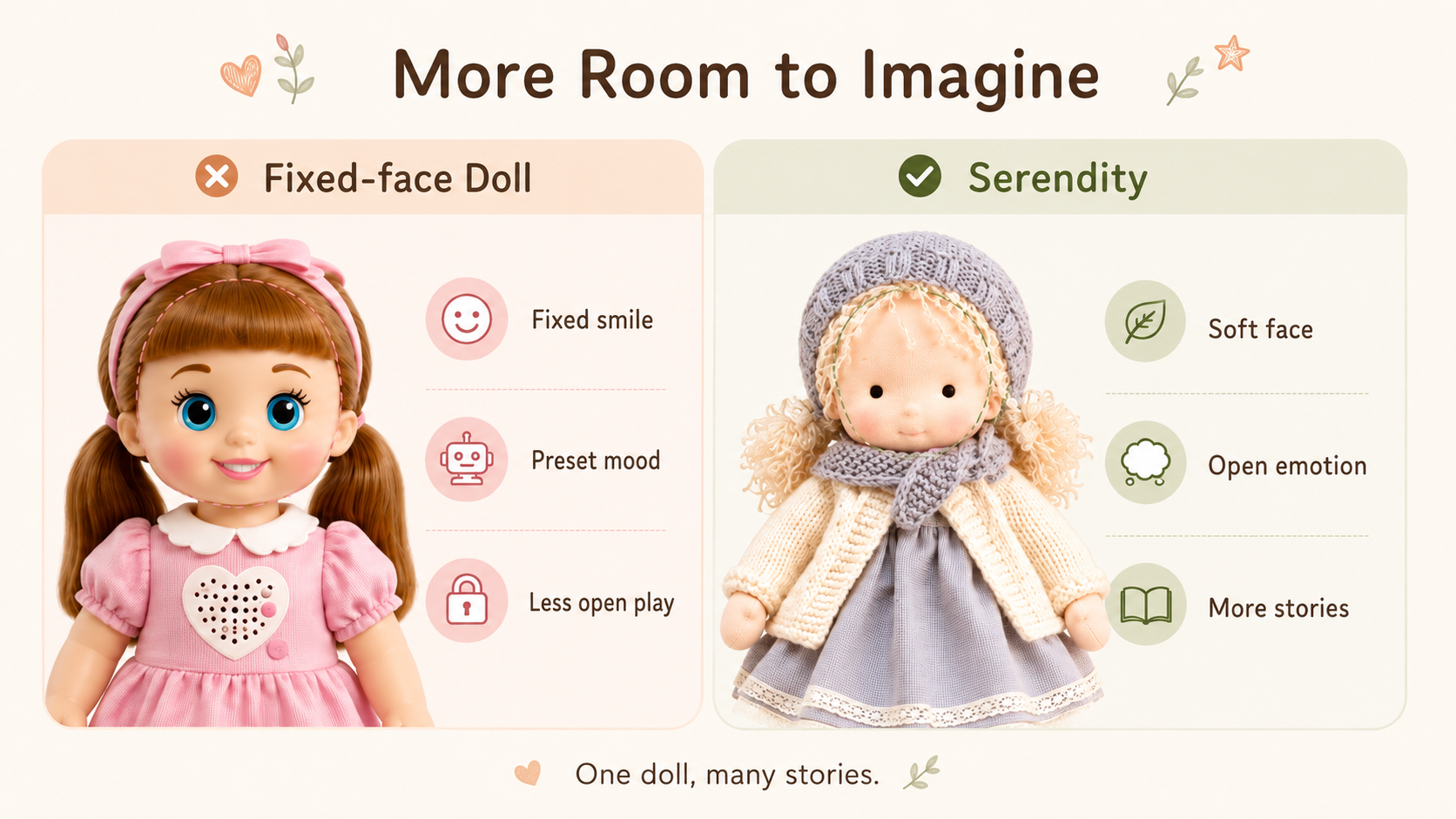
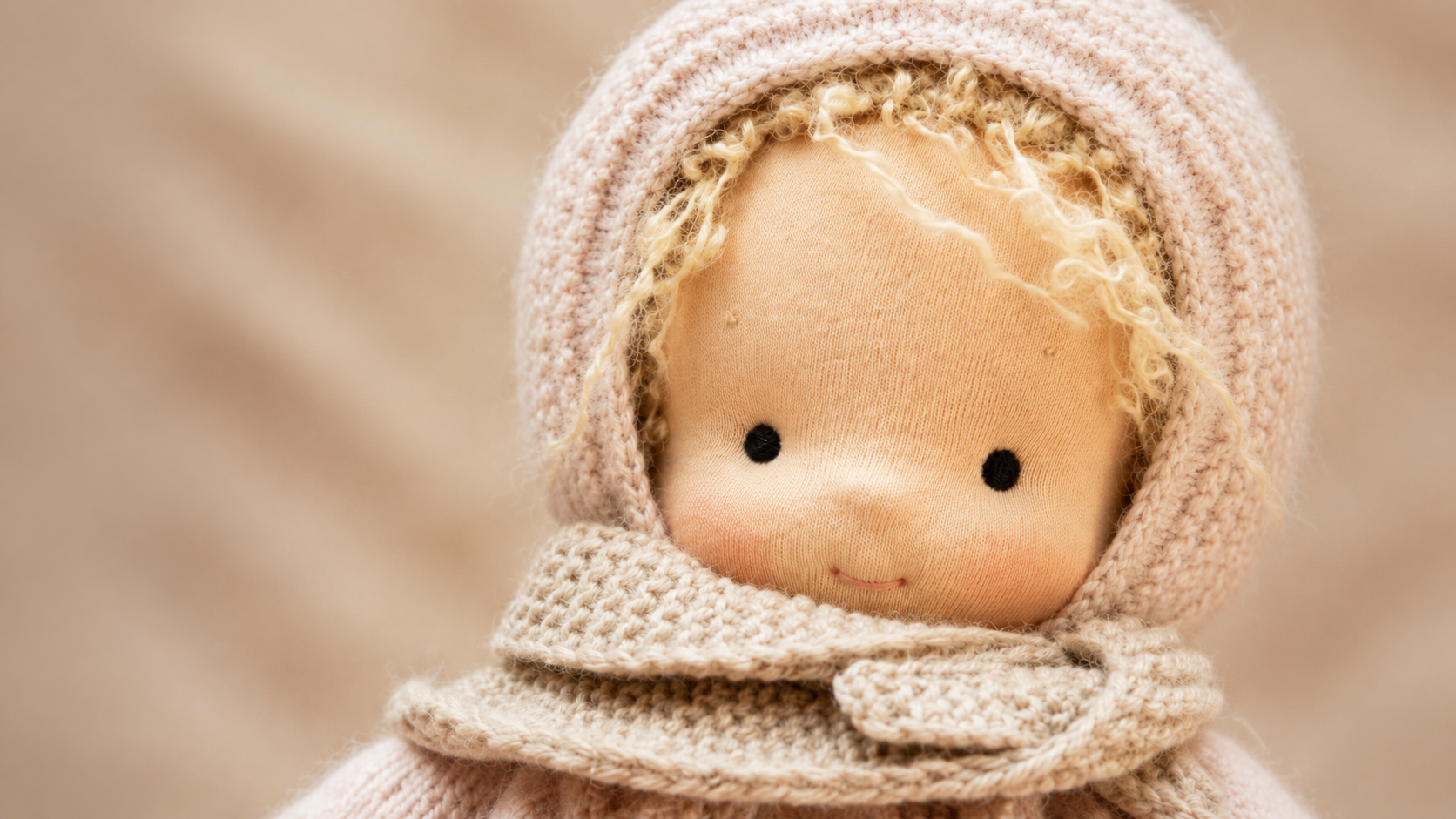
A broad smile can make every scene look happy, while a dramatic expression can steer the whole story. Serendity’s simple stitched features act more like a blank page. The child supplies the feeling, which makes the same doll useful in many different stories instead of locking her into one character.
Why Toys That Do More Can Sometimes Leave Children Less To Do
Lights, recorded voices, and programmed actions can look exciting, but they often complete the most imaginative part of play before the child begins. When a toy supplies the words, reactions, and storyline, the child is more likely to press, watch, and repeat than to invent. Serendity is intentionally quiet: the child creates the dialogue, chooses the setting, and decides what problem the characters will solve, making play less about activating a feature and more about building a world.
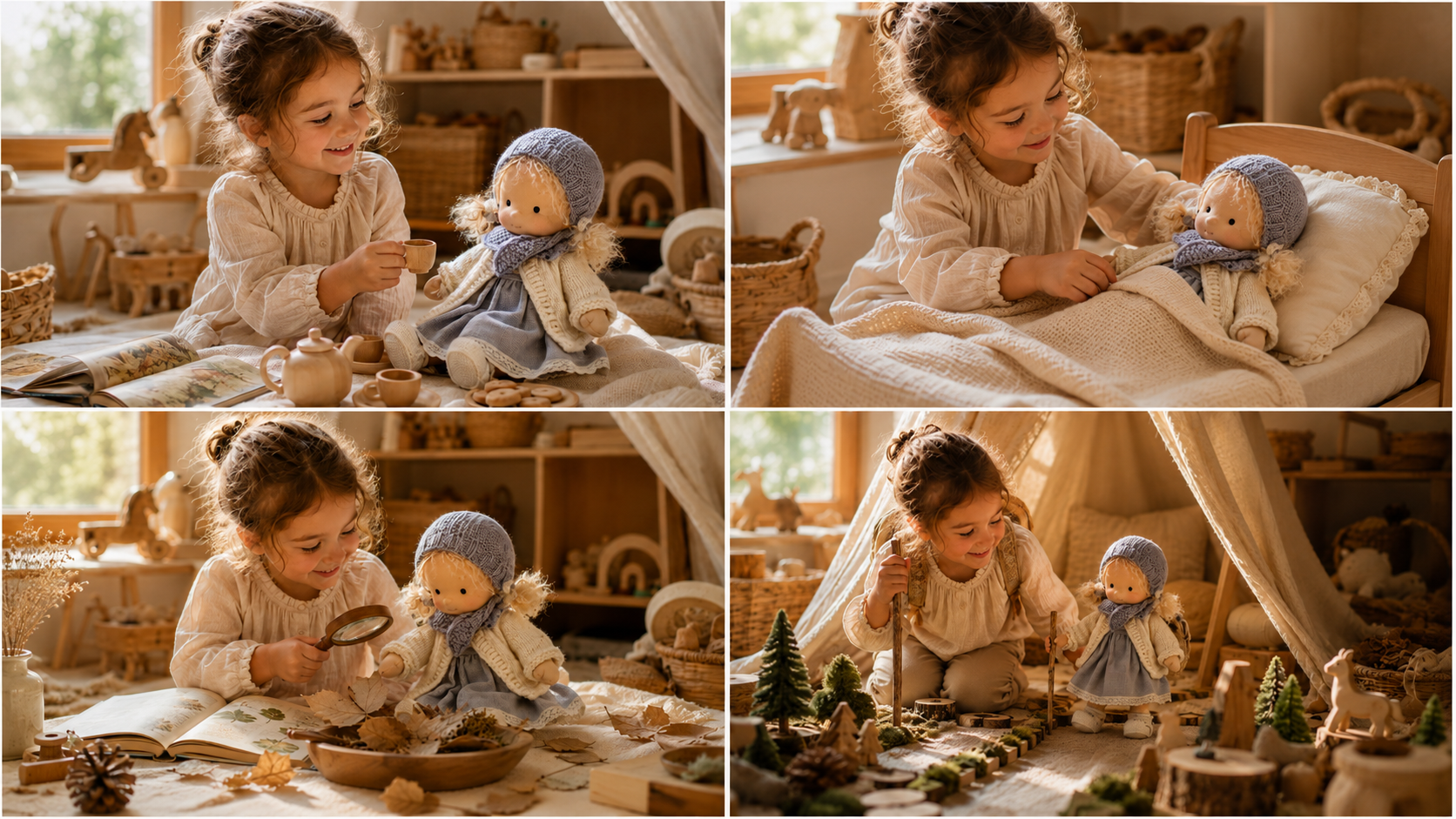
What Parents May Notice: The Same Doll Becomes A Different Character Every Day
A versatile doll does not need a new gimmick each week. Children can revisit the same companion because the meaning of the play changes with their interests and experiences. A trip, storybook, family routine, or new feeling can become tomorrow’s pretend scene.
This flexibility is what can turn a doll from a one-purpose novelty into a lasting play partner. As the child’s language, imagination, and daily world develop, the stories can become more detailed without requiring the doll to become more complicated.
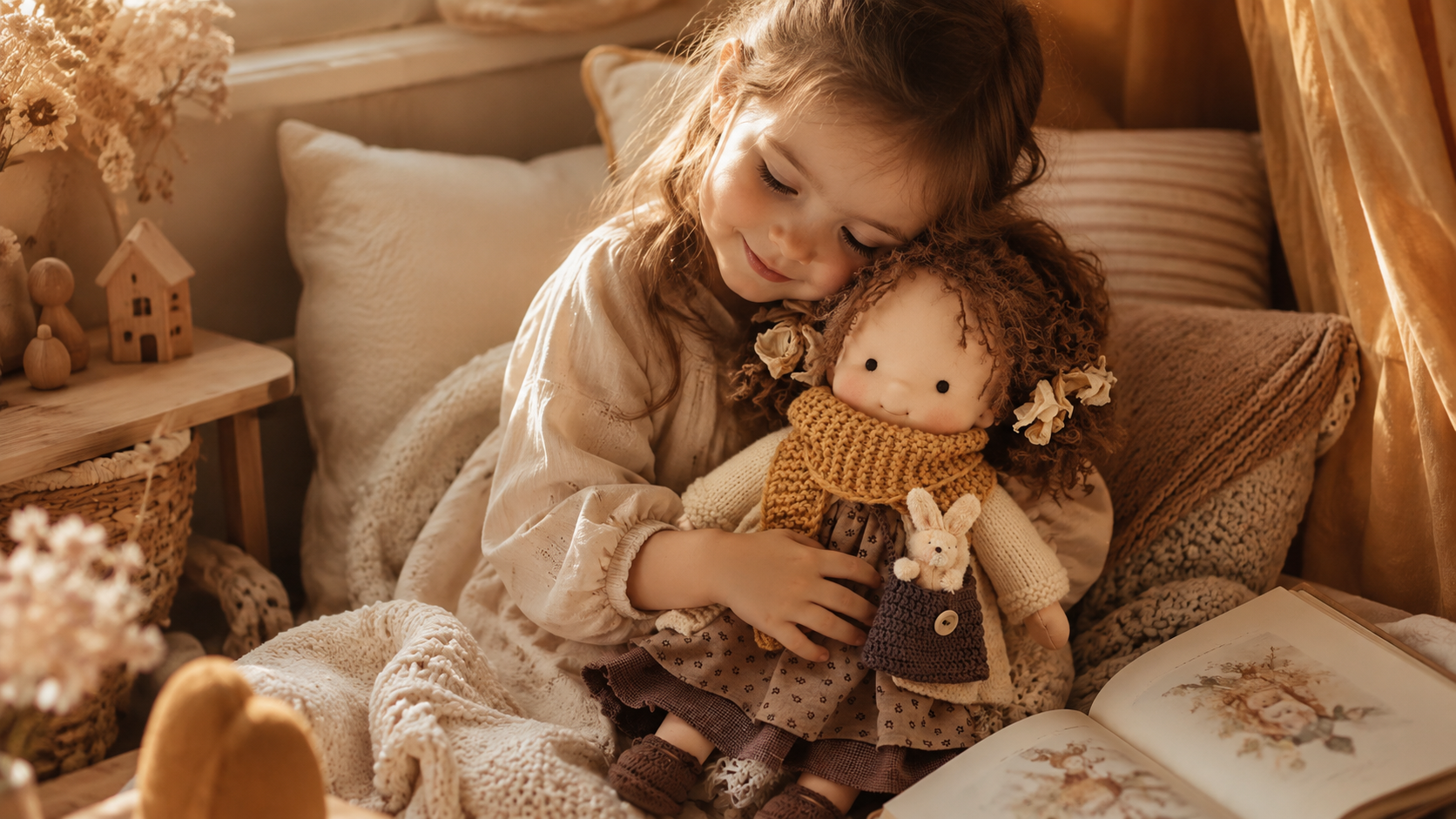
Natural Texture Makes The Experience Feel Warm And Real
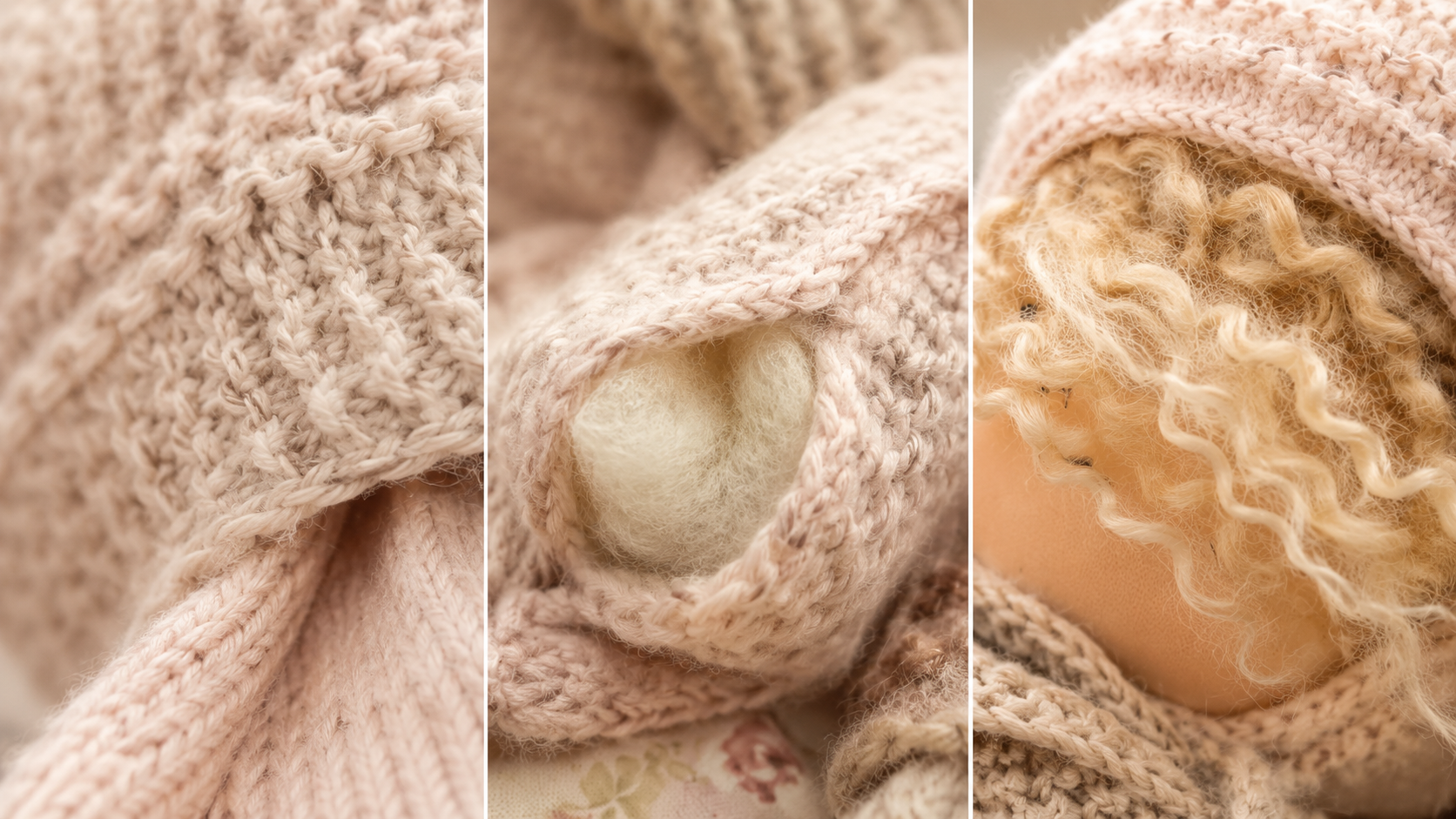
Serendity’s product description highlights a knitted cotton-style body, natural wool filling, and wool or cotton yarn hair. Those materials matter because children experience a doll through touch as much as sight. Soft fabric, resilient stuffing, and textured yarn create a gentler sensory experience than a hard plastic shell.
The result is a companion that feels comfortable to hold during stories, quiet time, pretend caregiving, and everyday adventures. Rather than using “natural” as an abstract label, the benefit is immediate: the doll feels soft, warm, and inviting in small hands.
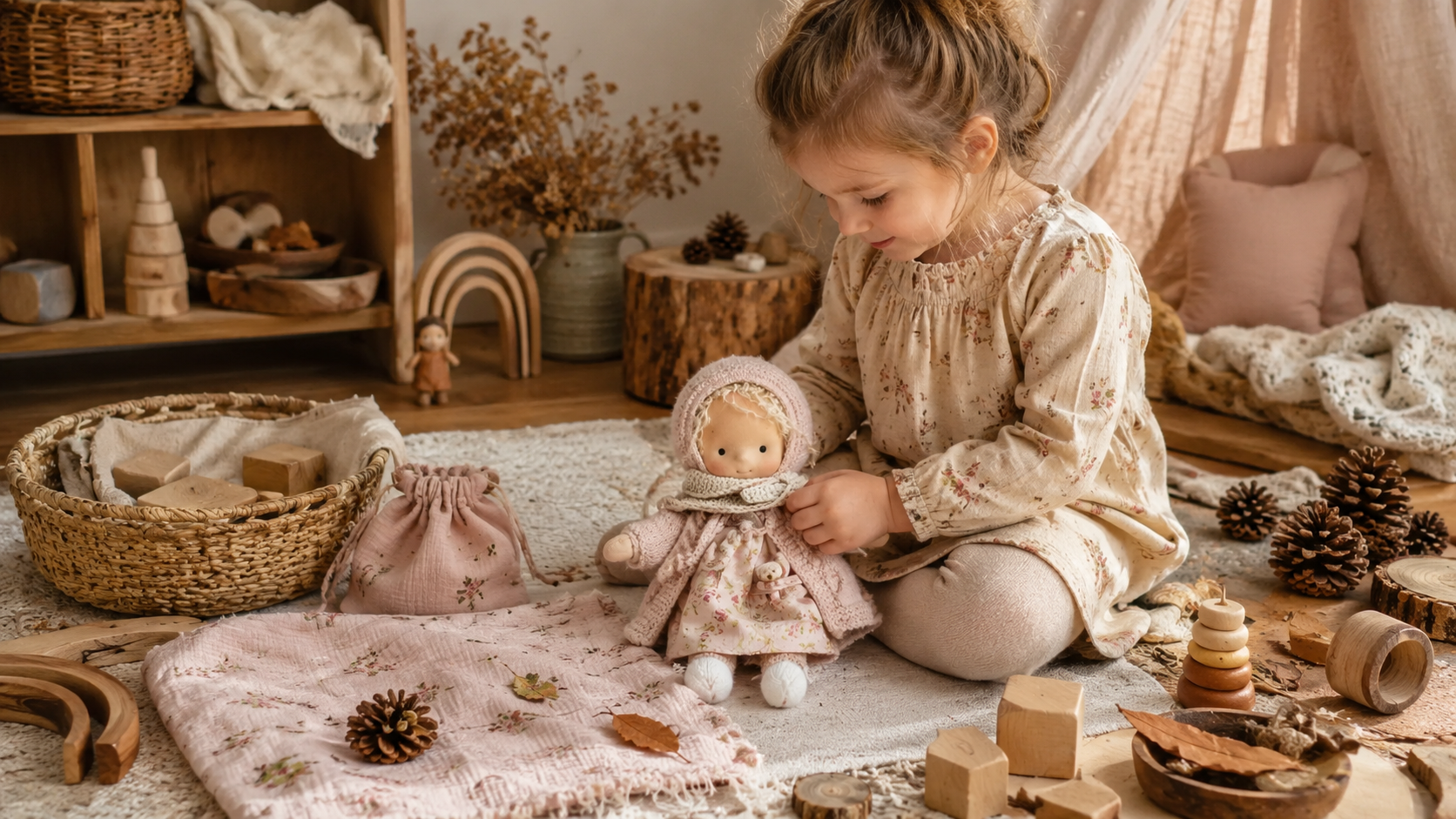
Place the doll beside a few open-ended materials such as fabric scraps, a small basket, wooden blocks, or a picture book. Instead of explaining how to play, let the child begin. The objects may become a bed, a boat, a home, a picnic, or something an adult would never have predicted.
Brushable Hair Turns Everyday Care Into Open-Ended Play
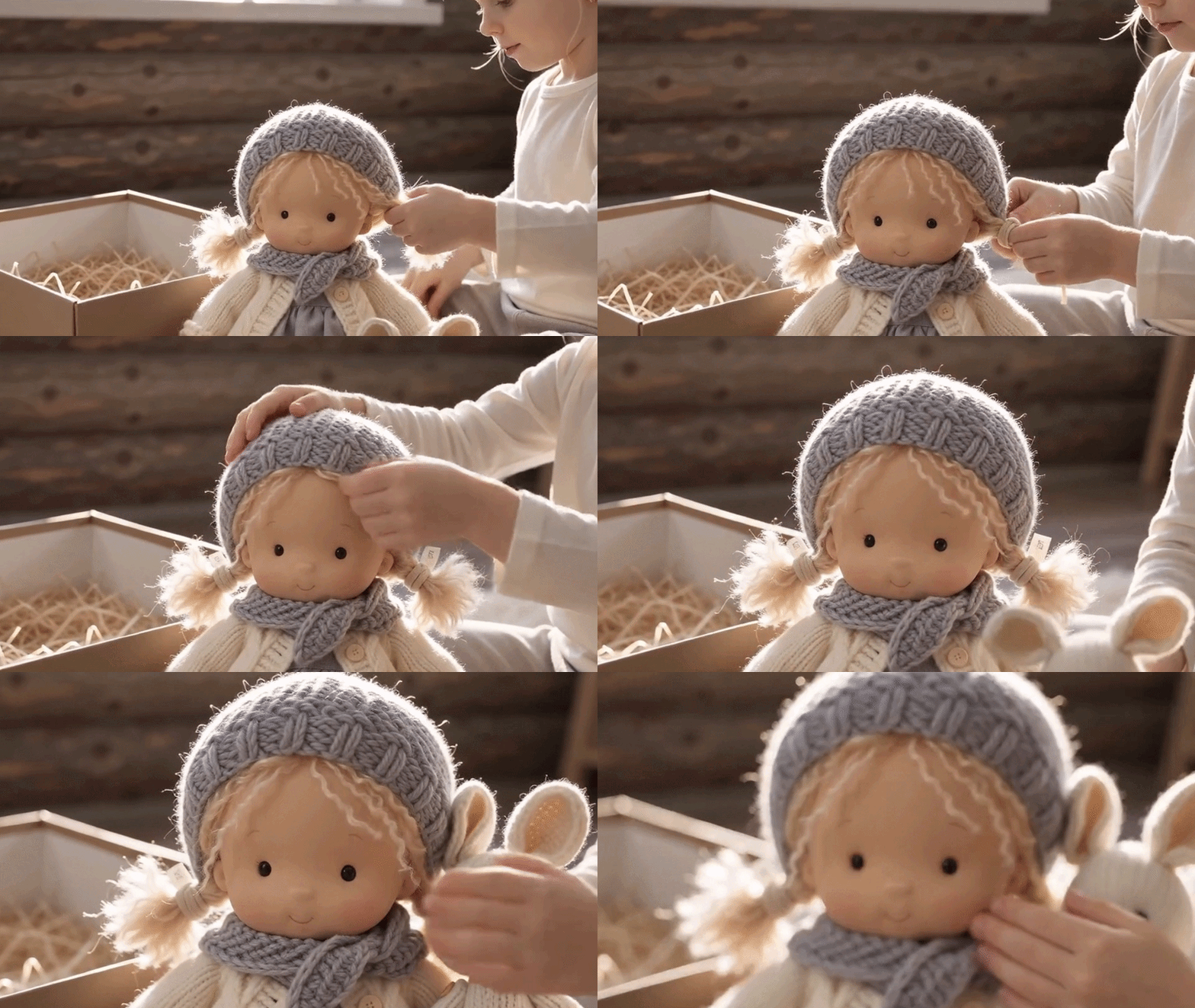
The securely fixed yarn hair is made for gentle styling, giving children a familiar activity they can repeat in many ways. They can brush it, arrange simple styles, prepare the doll for an outing, or make hair care part of a larger story. These ordinary actions often become meaningful because children enjoy imitating the care they see around them. Hairstyling gives the child another way to express attention and decide who the doll will be today.
Removable Clothing Expands The Story Without Dictating It
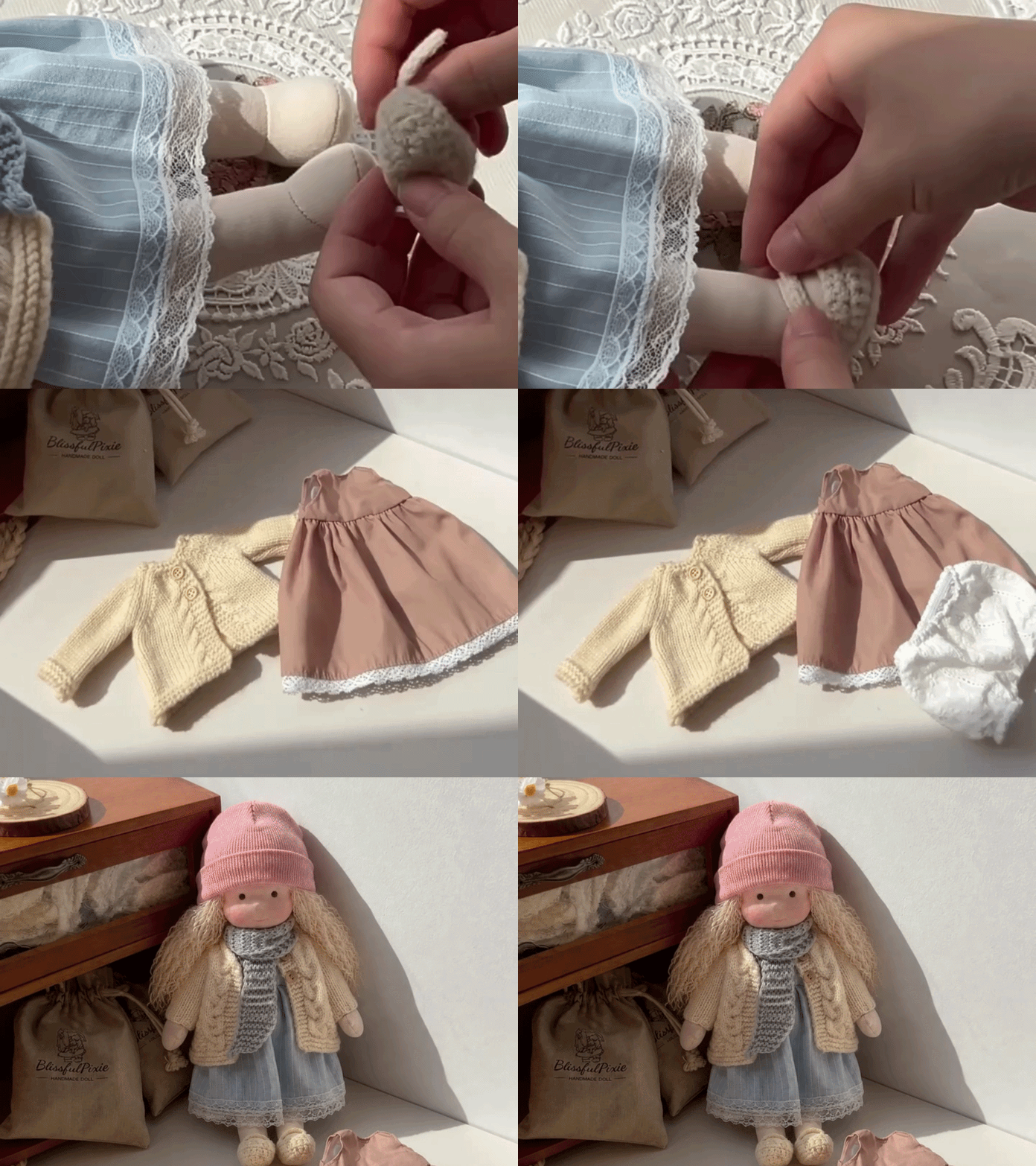
Changing an outfit can signal a completely new scene. The doll might be getting ready for bed, visiting a friend, going on an imaginary journey, or simply needing help with a daily routine. The child chooses the reason, sequence, and dialogue. Because dressing is an action rather than a prerecorded result, it invites participation, supports nurturing role-play, and makes the doll feel involved in the child’s world while leaving the story open.
A companion doll does not need factory‑perfect sameness to feel special. Subtle variations in stitching, hair placement, and facial features become part of the doll’s personality. They help the child feel this is their one‑of‑a‑kind companion, rather than an identical character churned out by machinery.
Distinct Character Makes The Doll Feel Personally Chosen
Mass-produced character toys are designed to look exactly alike. Serendity’s crafted details create a different emotional impression: subtle variations can make each face, hairstyle, and finish feel individual. That sense of character is especially meaningful in a gift intended to be held, named, dressed, and included in family stories.
The appeal is not perfection for display. It is warmth in use. A softly made companion can collect memories over time and feel more personal with every adventure, bedtime routine, outfit change, and story the child adds.
A Thoughtful Companion For Quiet Play, Shared Stories, And Everyday Adventures
Serendity is best understood not as a doll that performs, but as a starting point. The approximately twelve-inch size is made to feel manageable in a child’s arms, while the soft body, styleable hair, removable clothing, and gentle expression support many kinds of play.
Parents can use her for independent storytelling, sibling play, read-aloud extensions, travel companionship, or calm moments away from screens. The strongest reason to explore the product is simple: it gives children a familiar friend without deciding the friend’s entire story for them.
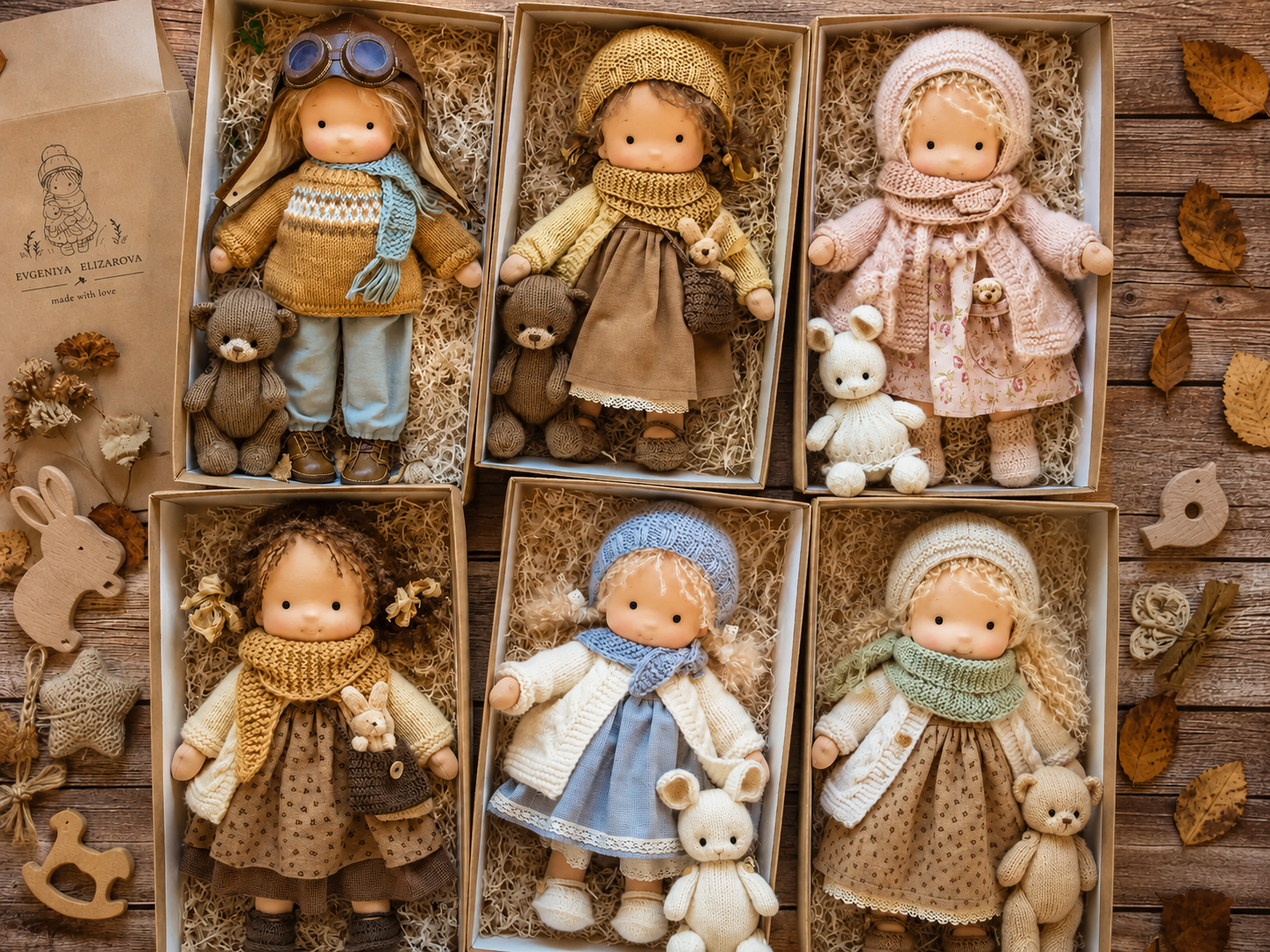
The product page presents multiple doll styles, so families can look through the available faces, hair, and clothing details and choose the companion that feels most meaningful to their child.
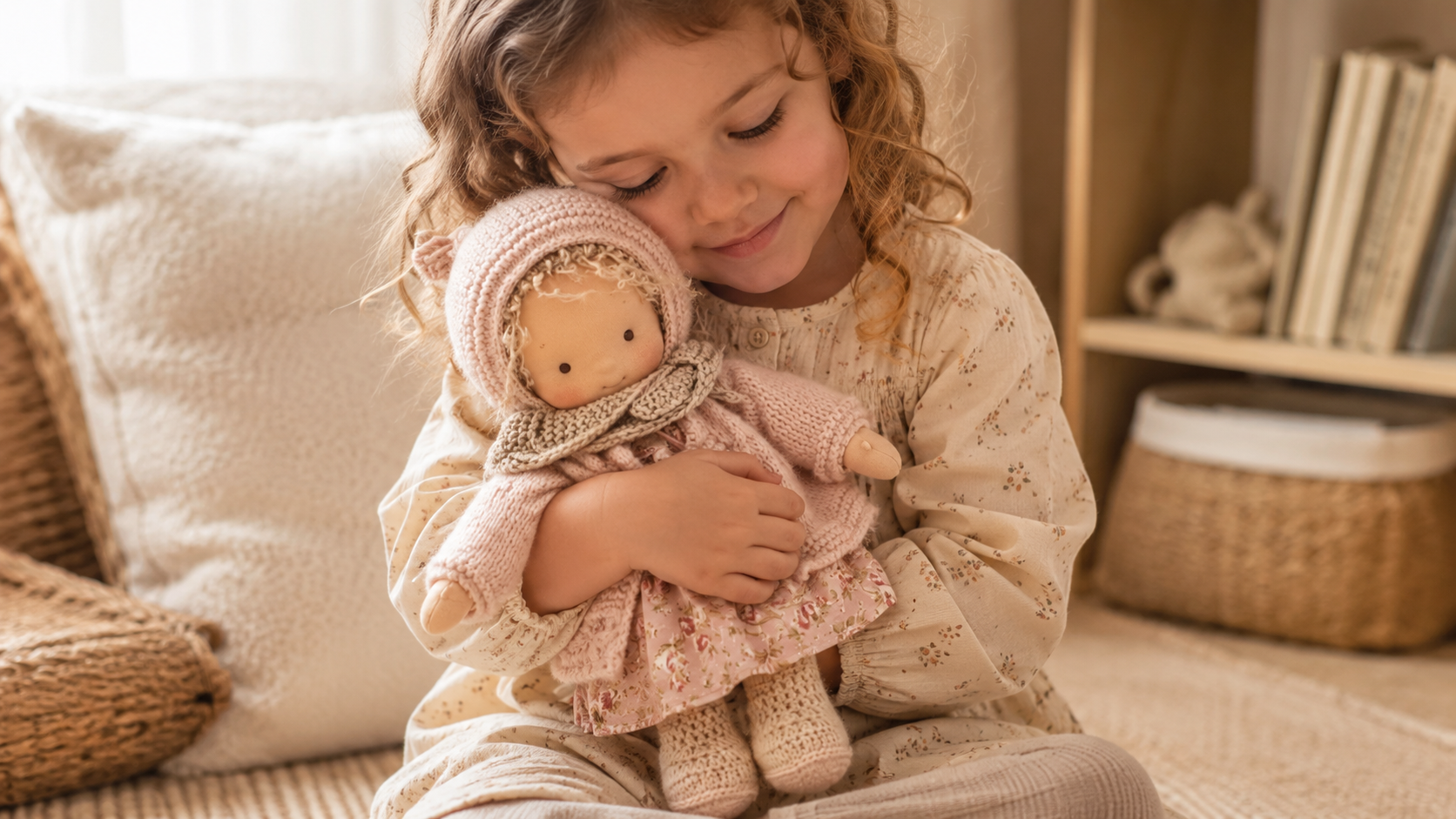
The full product page lets you review the available doll styles, the approximately twelve-inch size, clothing option, material description, hair details, and additional product images before choosing a companion.
✅️Soft cotton-style body ✅️ Natural wool filling ✅️ Styleable yarn hair ✅️ Gently suggested expression ✅️ Removable clothing ✅️ Designed for open-ended play
Tip: Choose the doll by thinking about the stories the child already loves to create. The best match is not necessarily the most detailed style, but the companion that leaves them excited to invent a name, personality, and first adventure.