
What We Check First Before Recommending A Jewelry Organizer For A Cluttered Vanity
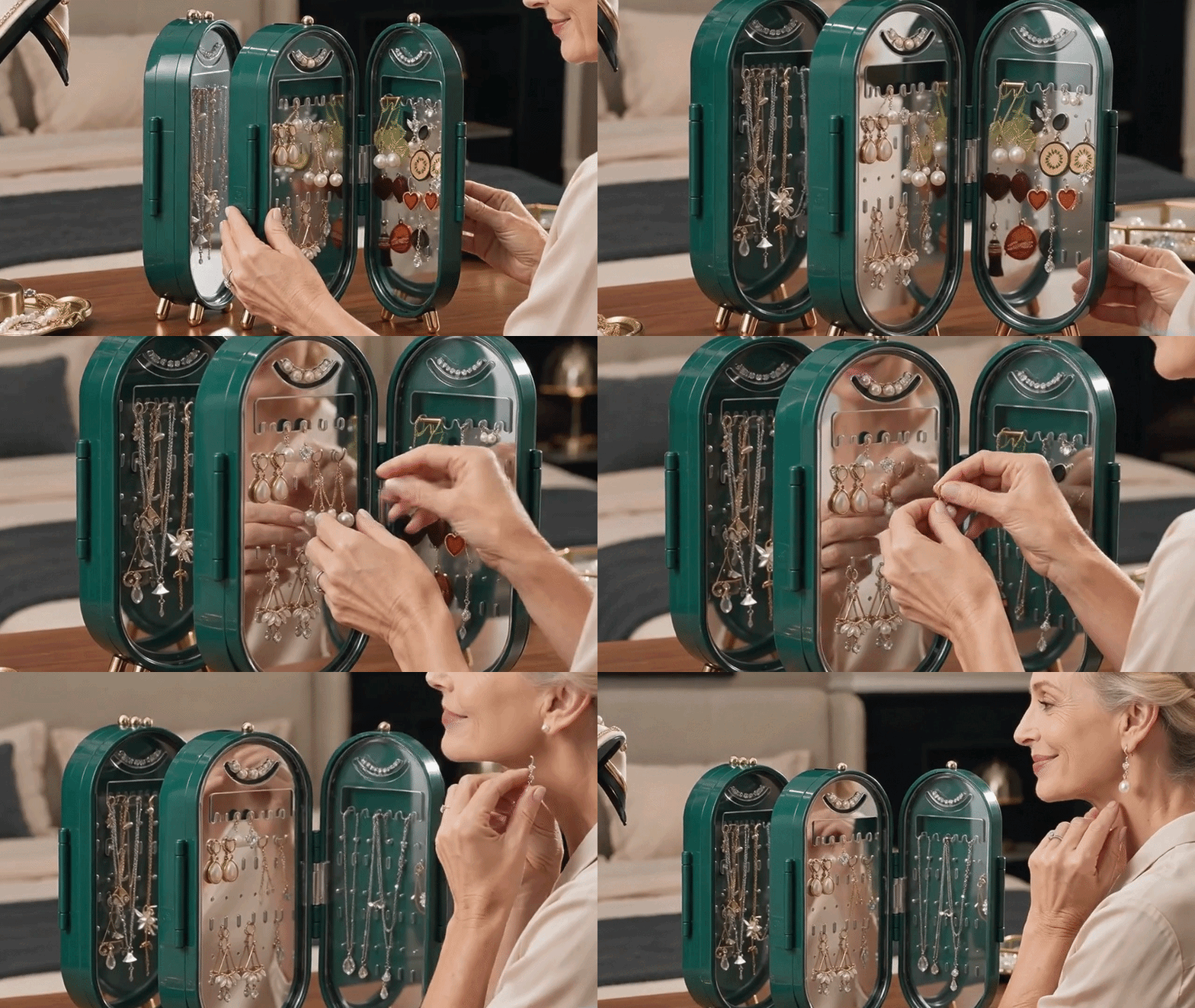
When a jewelry collection starts spilling into drawers, cosmetic bags, and little dishes, the problem is rarely a lack of storage. The real problem is visibility. Earrings disappear from their pairs, chains knot together, and the piece you wanted is usually hiding underneath five others. Before recommending any organizer, we ask whether it lets you see more of your collection at once, separates delicate pieces, and fits into a normal daily routine without taking over the entire vanity.
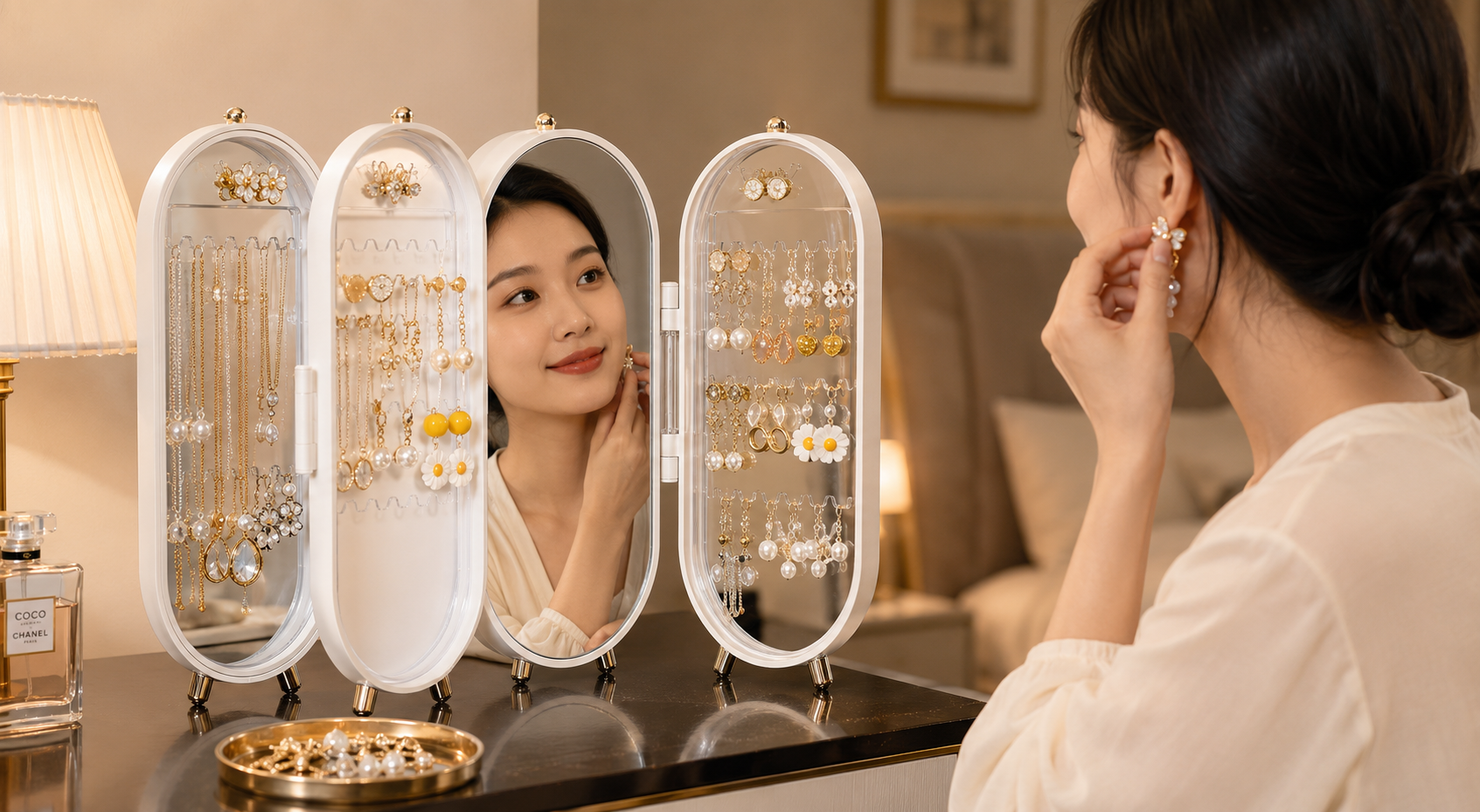
The PAVAROA Elegant Jewelry Storage Box With Mirror takes a different approach from a traditional drawer-style case. Its upright, foldable layout is designed to display earrings and necklaces in dedicated areas, then close into a compact form when you are finished. The integrated mirror adds a practical finishing step, so you can compare accessories without moving between a storage box and a separate mirror. It is less like digging through a box and more like opening a small personal jewelry station.
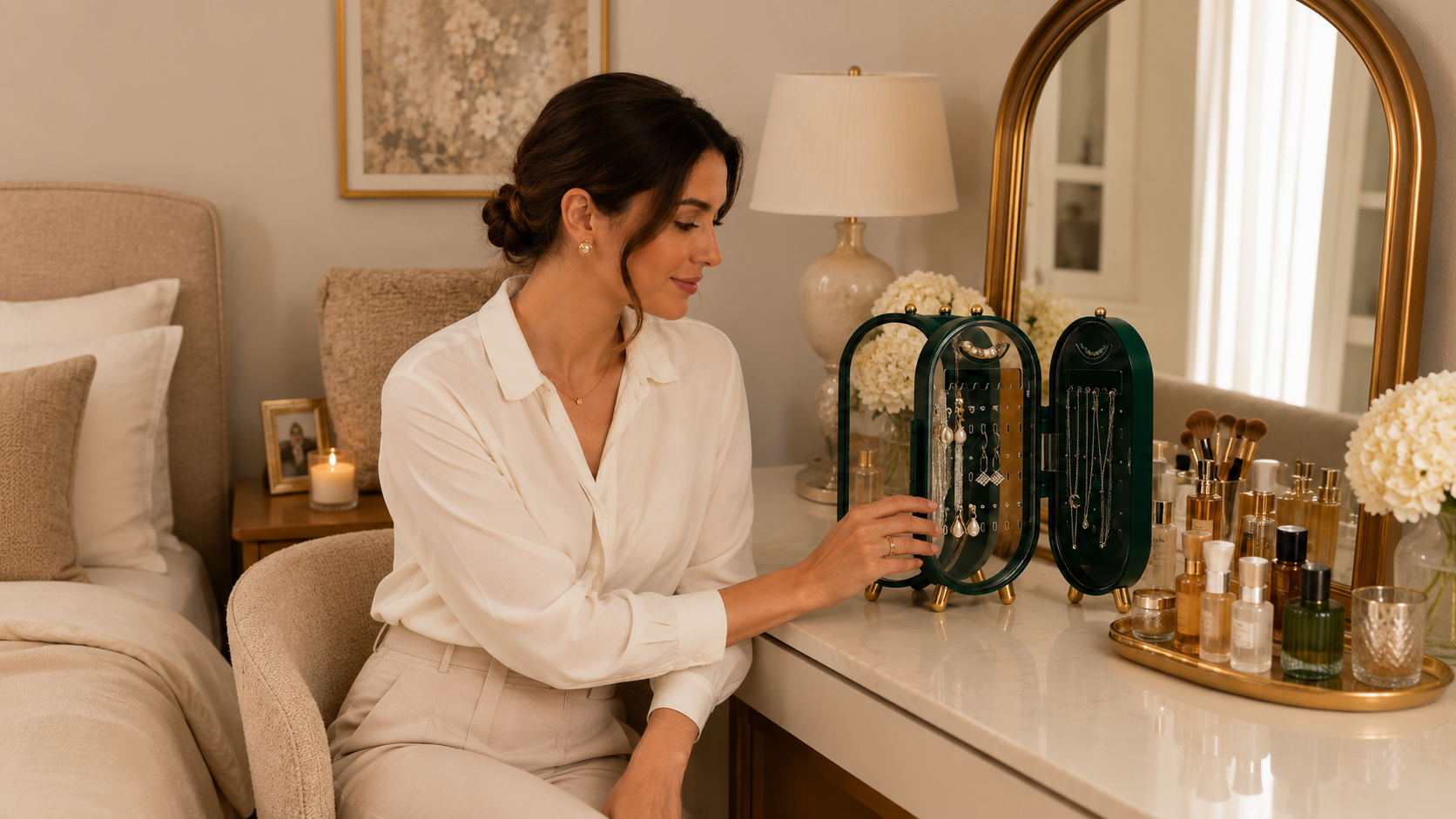
A useful jewelry organizer should answer three questions immediately: Where are my matching earrings, which necklace works with this neckline, and can I put everything back without creating tomorrow's mess?
The fold-out format helps because the collection is spread vertically instead of stacked in a pile. Think of it as giving every accessory a tiny assigned parking space — because necklaces are terrible parallel parkers and will absolutely wrap themselves around the nearest bracelet.
That is why this review focuses on access, separation, compact storage, and daily convenience rather than treating the product as decorative packaging. The strongest appeal is the combination of an earring display, necklace organization, a foldable footprint, and a built-in mirror in one lightweight organizer.
The Feature I Check First: A Fold-Out Design That Makes Jewelry Visible
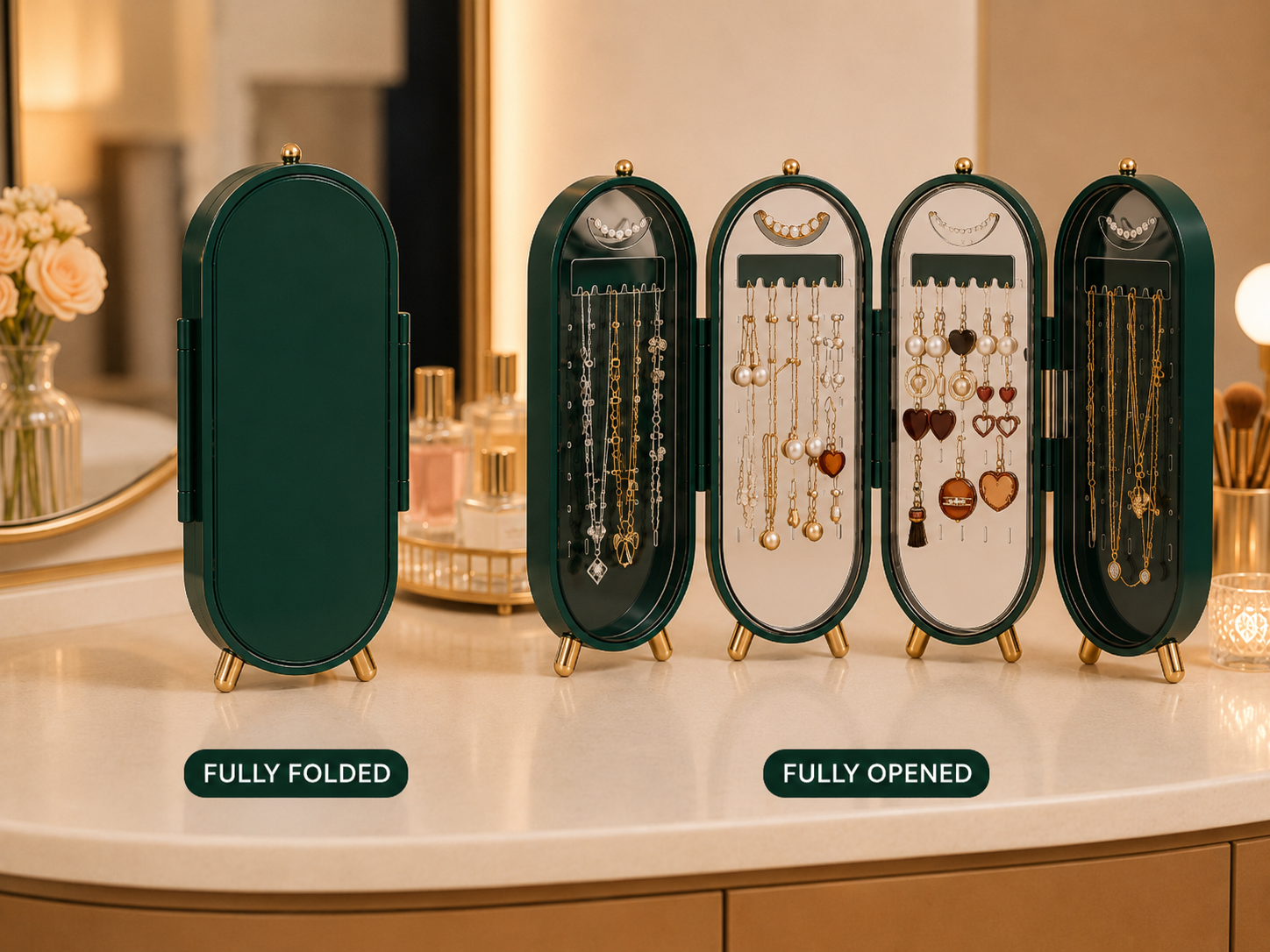
The biggest advantage of the fold-out structure is that it changes how you search for jewelry. Instead of lifting trays or opening several drawers, you can unfold the panels and scan multiple pieces at once. That matters during busy mornings, when the difference between wearing your favorite earrings and forgetting accessories completely is often thirty seconds of searching. A vertical display also helps smaller pieces feel like part of an organized collection rather than loose objects scattered across a surface.
When you are finished, the panels fold back together to reduce visual clutter. This open-when-needed, closed-when-done routine is especially useful for smaller vanities, bathroom counters, shelves, and bedside tables where a wide organizer would occupy too much permanent space.
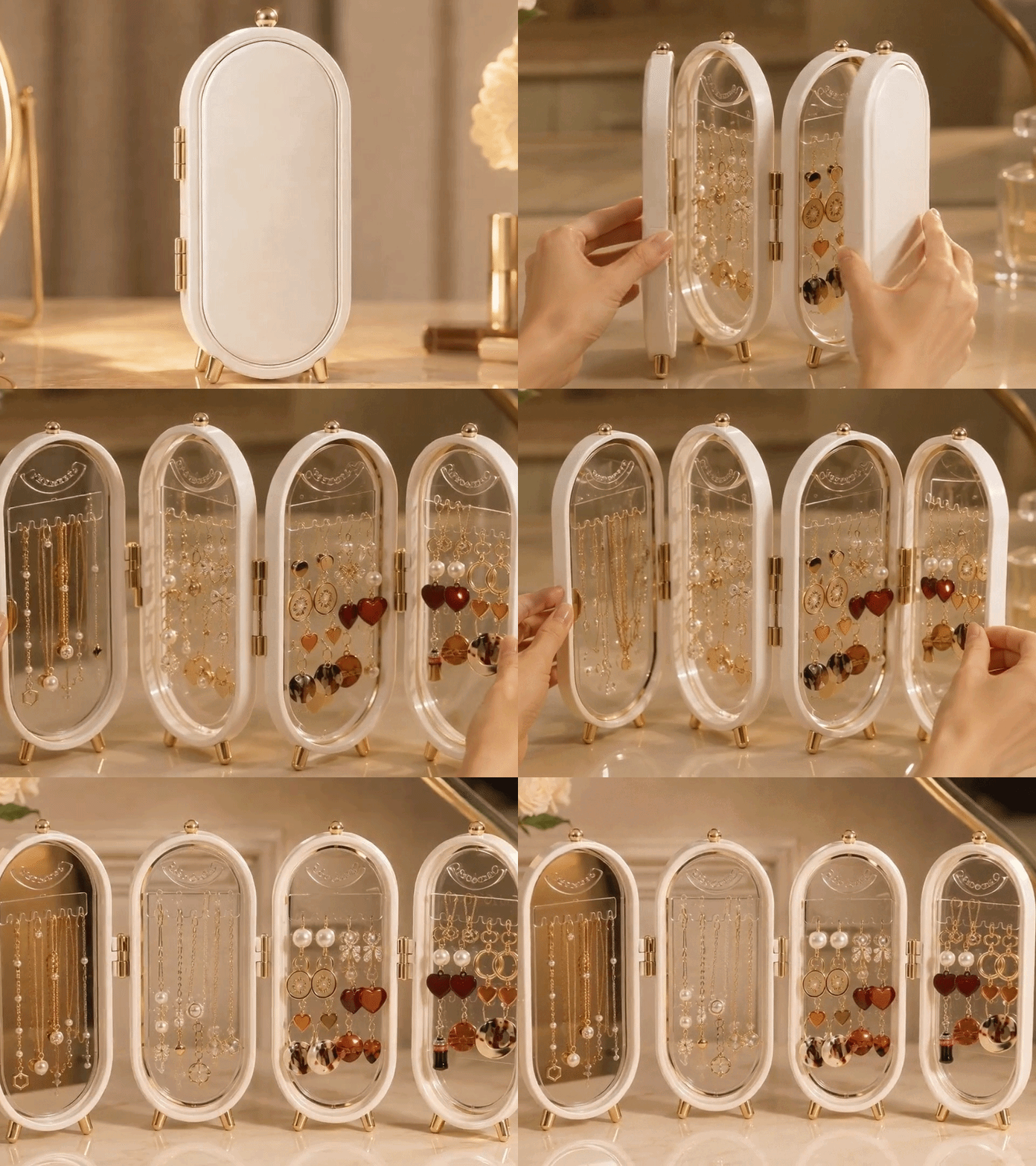
Jewelry is easier to wear when it is easier to see. A display-style organizer can remind you what you already own, reduce duplicate purchases, and make it simpler to rotate pieces instead of reaching for the same pair every day. The goal is not merely to store more; it is to make the collection more usable.
Why Loose Drawers Turn Small Jewelry Into A Daily Search
A normal drawer looks convenient until earrings slide under larger pieces, necklace clasps catch on one another, and delicate chains become a single impatient knot. Small accessories need separation because they move easily and are difficult to identify when stacked. The result is a repeated cycle: empty the drawer, find one item, leave the rest slightly messier, and promise to reorganize later. A dedicated upright system interrupts that cycle by giving different jewelry types more predictable places to return to.
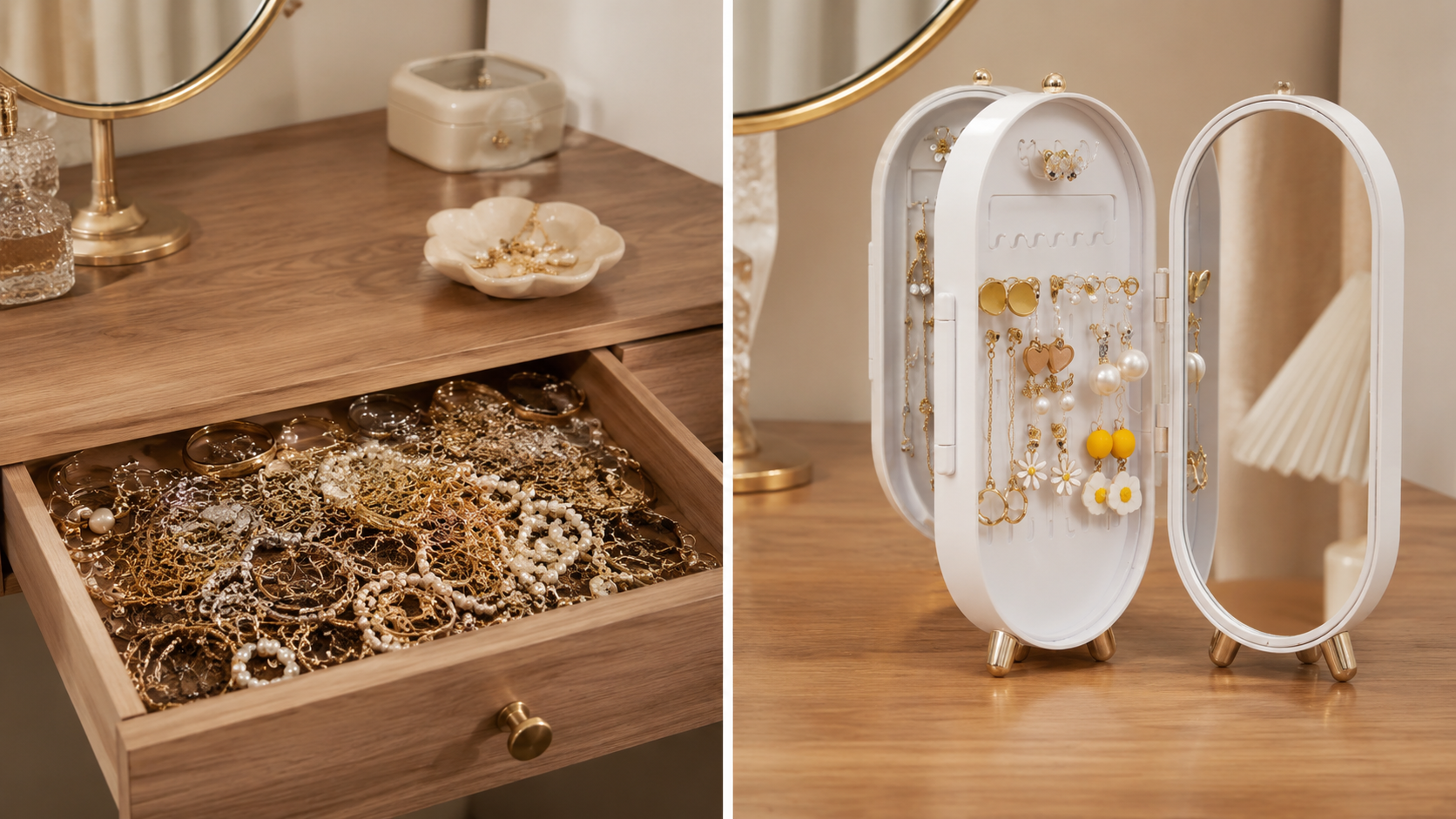
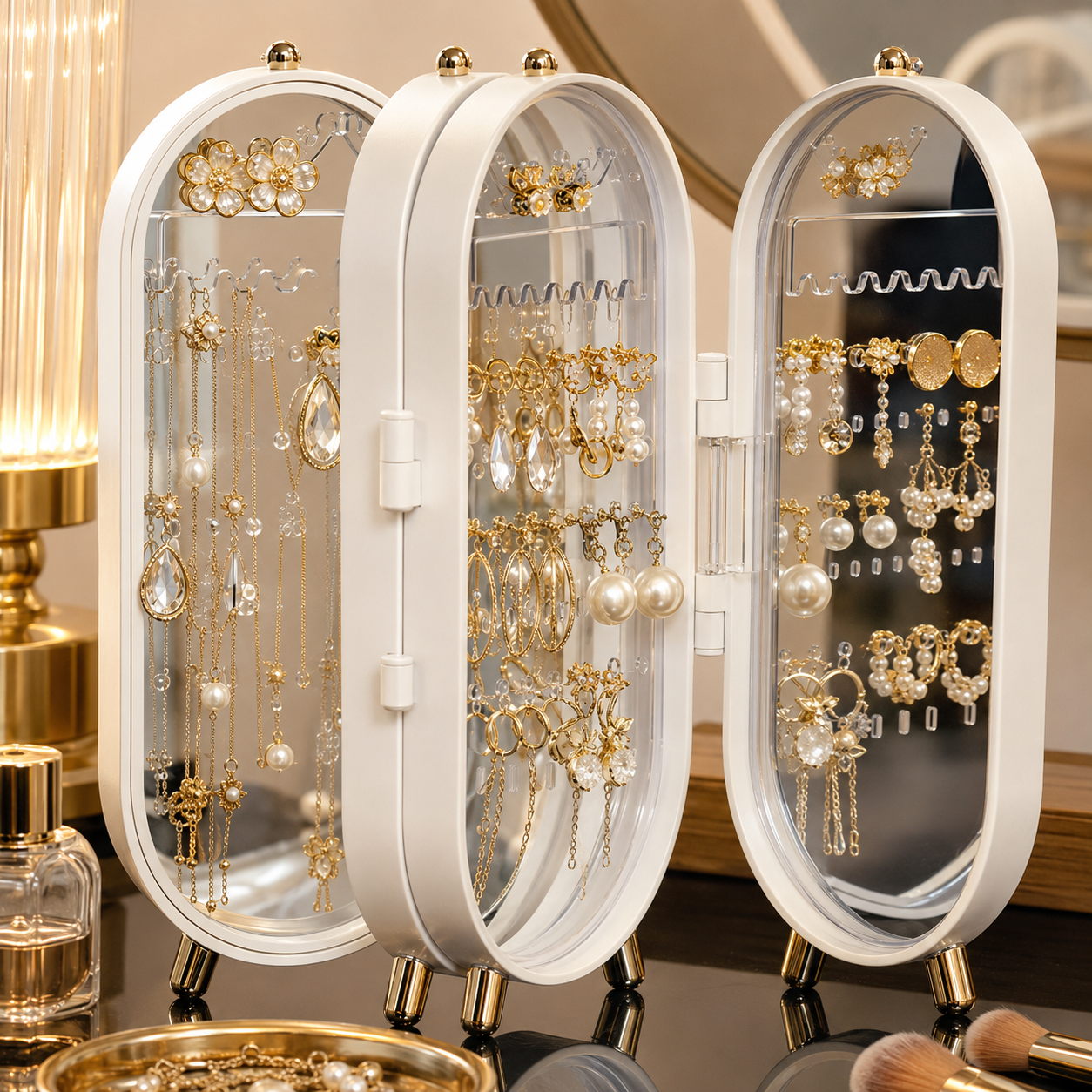
What I Notice First: Dedicated Earring Storage Keeps Pairs Together
Earrings are usually the first category to become chaotic because they are small, numerous, and easy to separate. This organizer is designed with a high-capacity earring display area and many dedicated openings. Studs, small drops, and lightweight pairs can be placed side by side, making it easier to compare colors, shapes, and sizes without opening individual pouches. More importantly, both earrings can return to the same visible location after use, which supports a faster and more repeatable getting-ready routine.
The practical benefit is not simply capacity. A visible grid creates a repeatable habit: remove a pair, wear it, and return it to the same two openings. That small routine can prevent the familiar collection of single earrings waiting for partners that never seem to reappear.
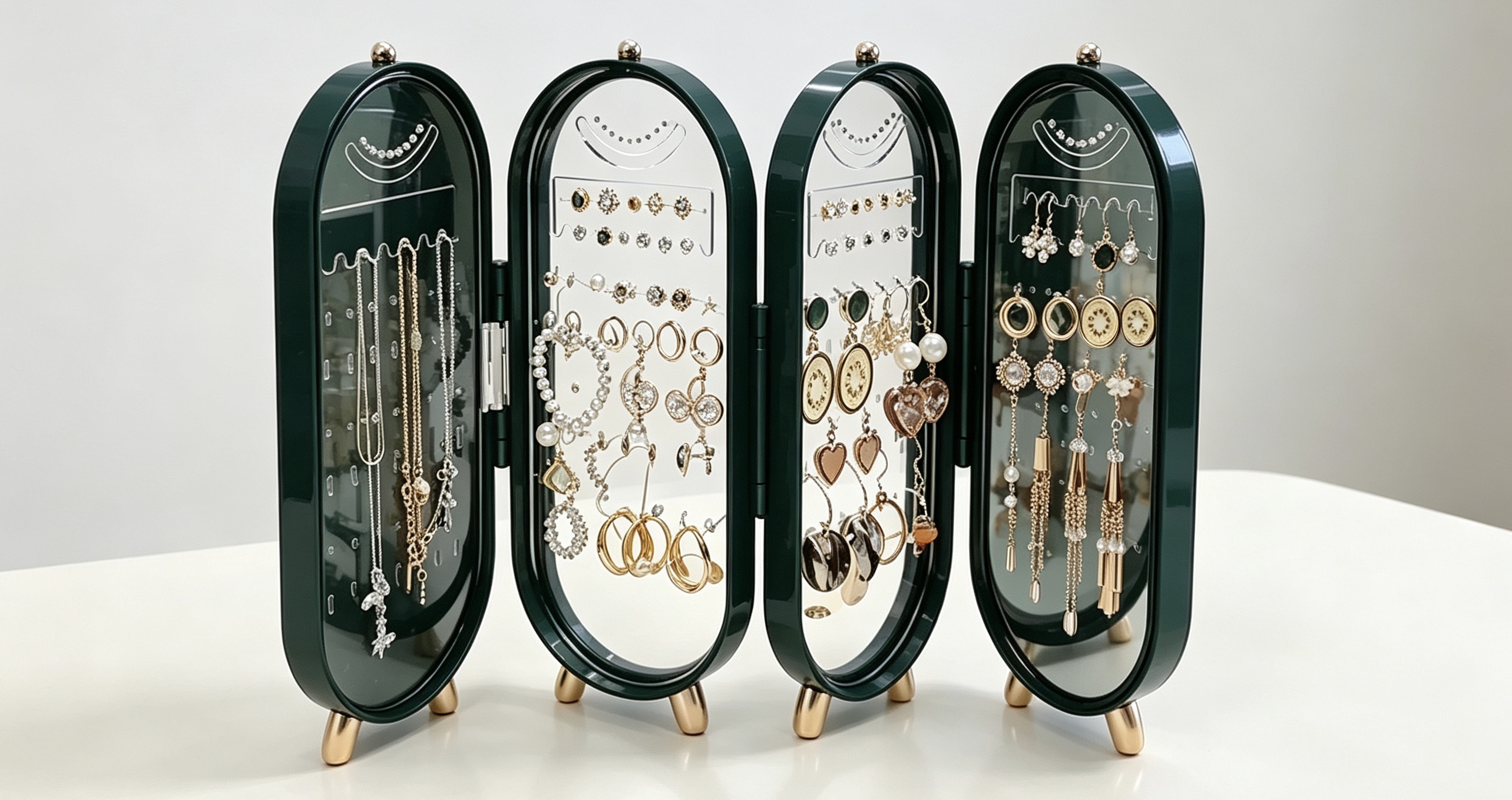
Separate Necklace Slots Help Reduce Knots And Clasp Confusion
Necklaces need a different storage strategy from earrings. Chains behave best when they hang separately, with enough distance to keep pendants and clasps from crossing. The organizer uses multiple necklace positions and curved storage grooves for small pieces. This layout gives frequently worn chains a visible position instead of leaving them coiled in a dish. It also makes length comparison easier, which helps when choosing between a short pendant, a medium chain, or a layered combination.
No compact organizer can guarantee that every chain will remain perfect, especially during transport, but dedicated hanging points reduce the contact that usually creates tangles. For delicate pieces, closing clasps before storage and leaving space between neighboring chains remains the best daily habit.
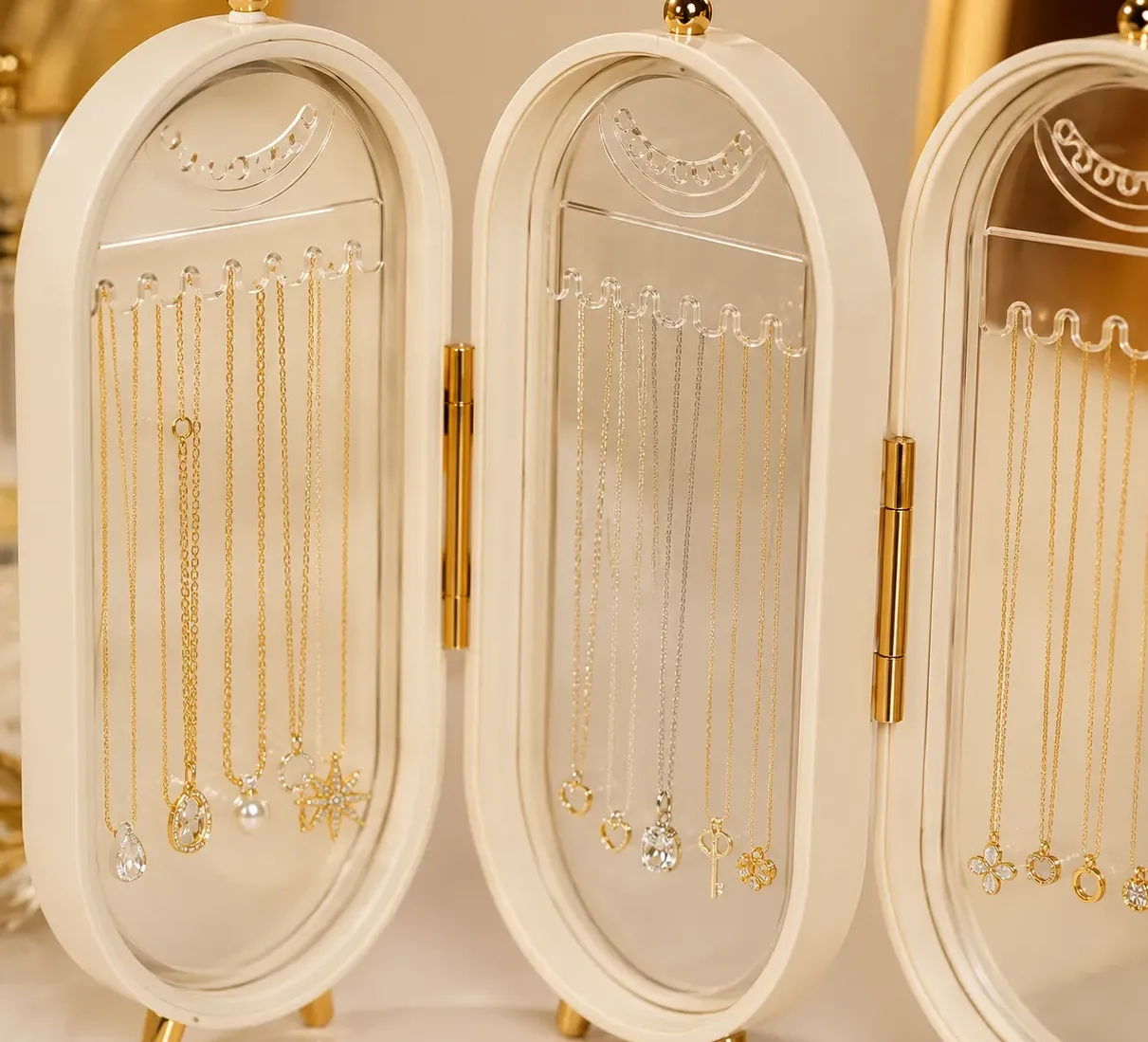
Store your five most-worn pairs and three most-worn necklaces first. If you can select, remove, and return them without disturbing the surrounding pieces, the organizer is supporting your real routine rather than merely looking tidy in a photo.
The Integrated Mirror Turns Storage Into A Small Styling Station
A mirror may seem like a minor addition, but it removes an extra step from getting ready. After choosing earrings or a necklace, you can check proportion, color, and placement immediately beside the collection. That is useful when comparing two pairs, adjusting a pendant, or deciding whether an outfit needs a subtle accessory or a stronger statement. Keeping selection and checking in one place can also reduce the habit of carrying loose pieces across the room and forgetting where they were left.
The Compact Upright Footprint Uses Vertical Space Instead Of Counter Space
The organizer's narrow upright profile uses vertical height instead of spreading across a large area of the counter. That proportion can work well on a crowded vanity, dresser corner, bathroom shelf, or inside a wardrobe. Unlike a broad tray that permanently occupies a large surface, the organizer can stay folded when not in use and open only when you are selecting jewelry. The result is practical storage without requiring a dedicated dressing room.
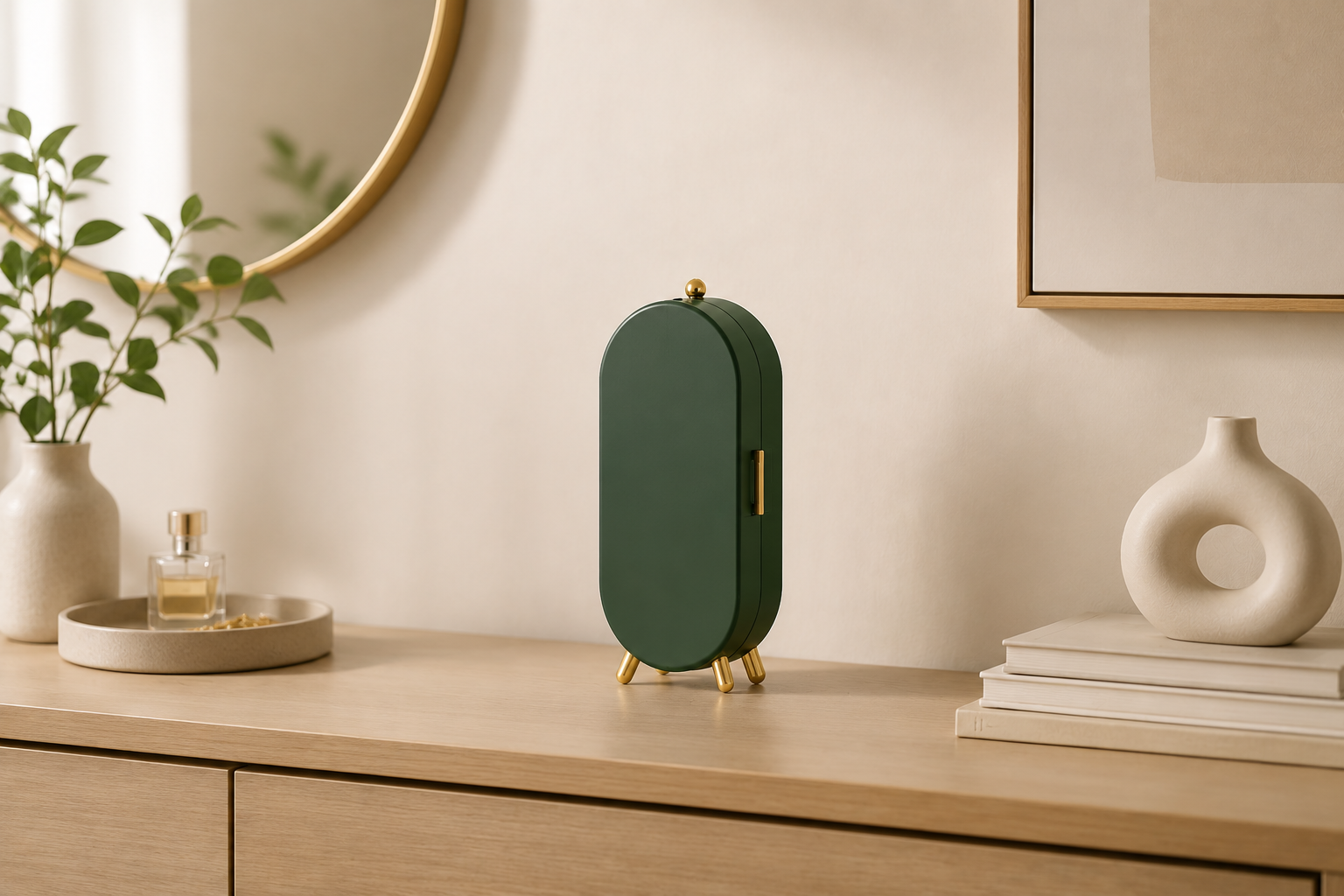
Small-space organization works best when an item uses height, closes neatly, and does not need a complicated setup. The foldable upright form is designed for exactly that kind of routine: open it, choose a piece, check the mirror, return the jewelry, and fold the organizer closed again.
Designed For Everyday Organization Without Looking Like Utility Storage
Storage products often solve clutter by introducing a new visual problem: bulky plastic drawers, open trays, or mismatched containers. This design keeps the profile slim and uses the jewelry itself as part of the display. When open, it presents earrings and necklaces in an easy-to-browse format. When folded, it becomes a compact case that can sit more quietly among perfume, skincare, makeup brushes, and other vanity essentials.
It is also a practical gift format because the benefit is immediately understandable. Someone who owns earrings, necklaces, or small accessories does not need a complicated system to use it; the designated openings and slots show where the pieces belong.
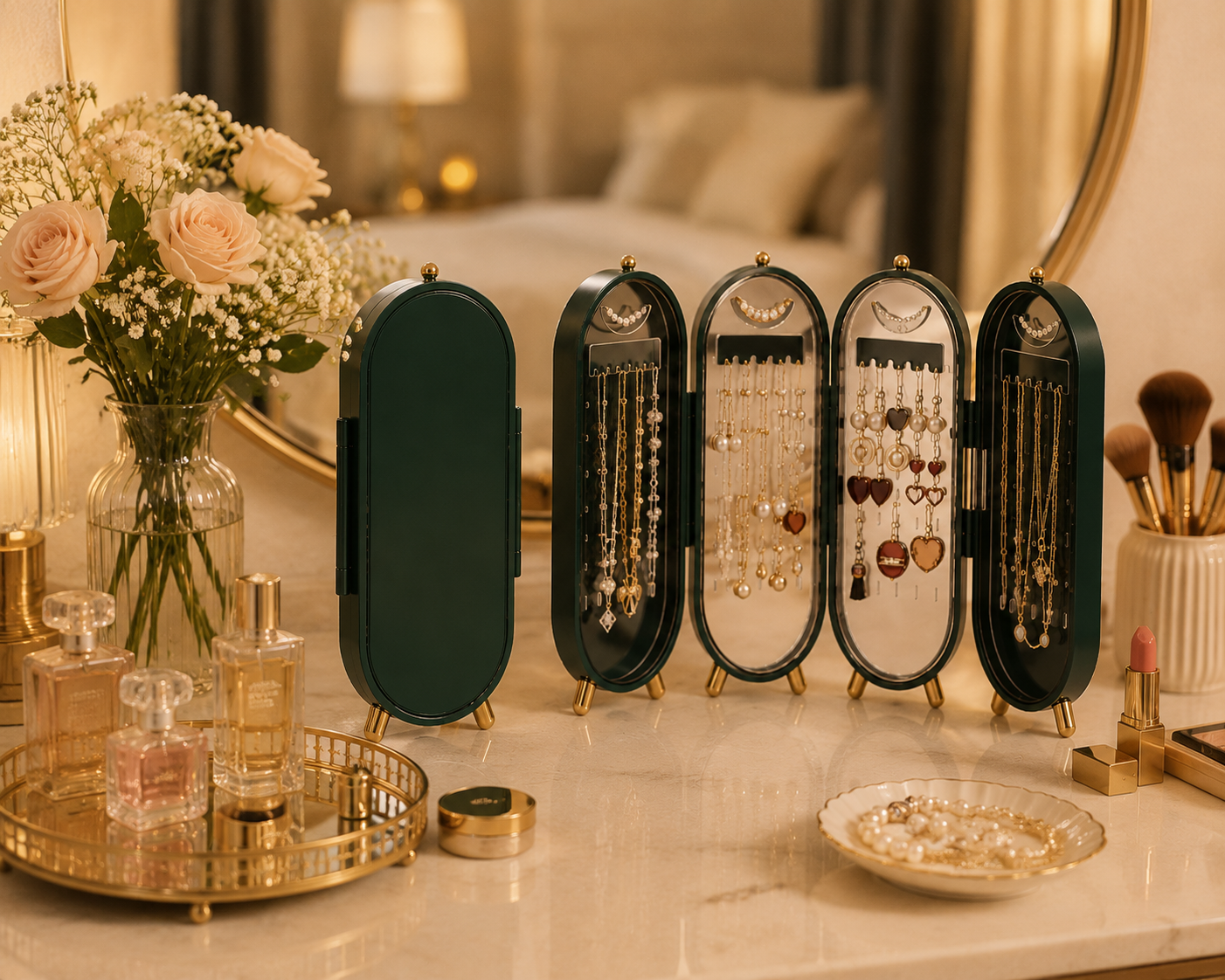
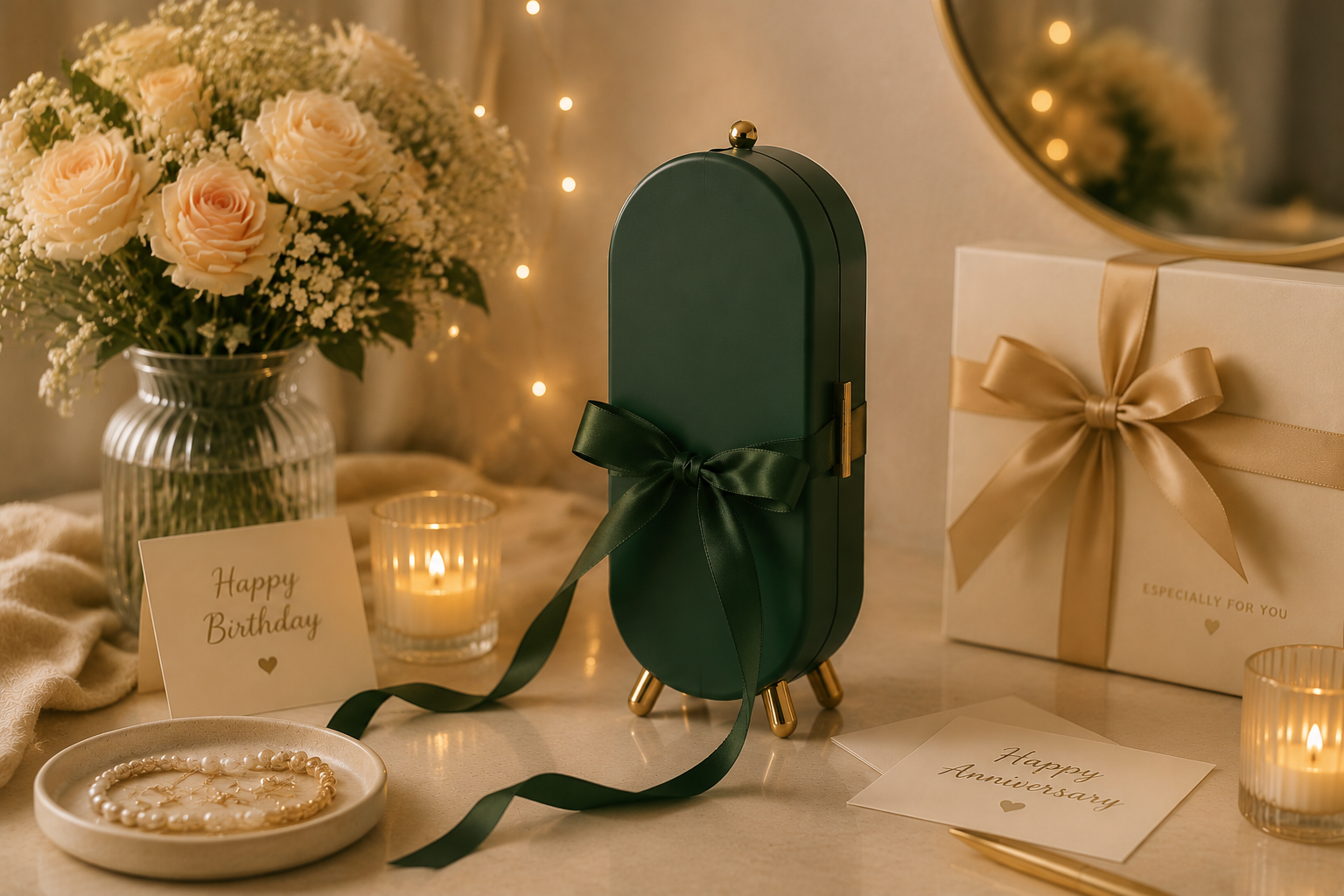
The product combines a foldable jewelry organizer, an integrated mirror, dedicated earring and necklace storage.
✅️ Foldable upright layout ✅️ Integrated mirror ✅️ Dedicated earring and necklace storage Compact vanity footprint
Tip: Use the product photos to check hole spacing, necklace length, and how the panels close. Choose based on your actual jewelry collection, not capacity numbers alone.